
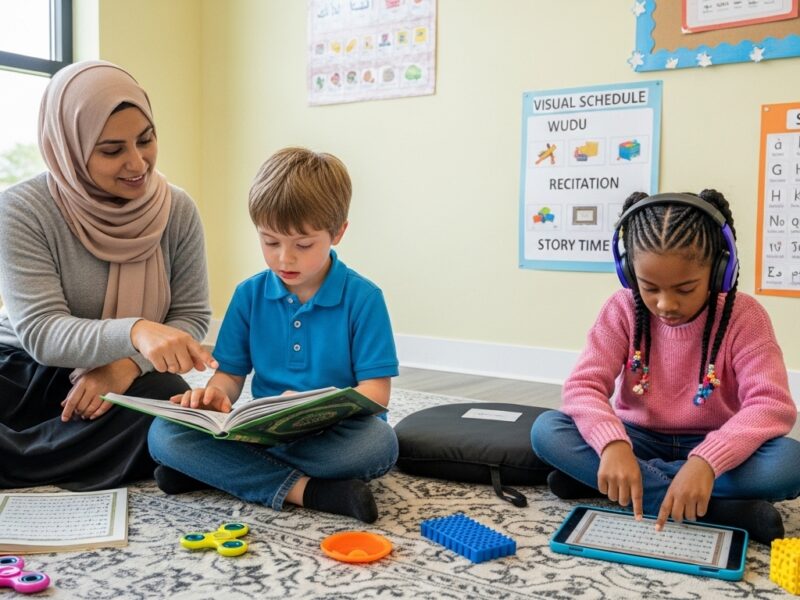
How to Teach Quran to Autistic Children
How to Teach Quran to Autistic Children: A Comprehensive Guide
Teaching the Quran to a child on the autism spectrum requires patience, structure, and a deep understanding of neurodiversity. In this guide, we explore proven methods, sensory-friendly approaches, and how our online Quran learning programs create a safe space for your child to connect with Allah.
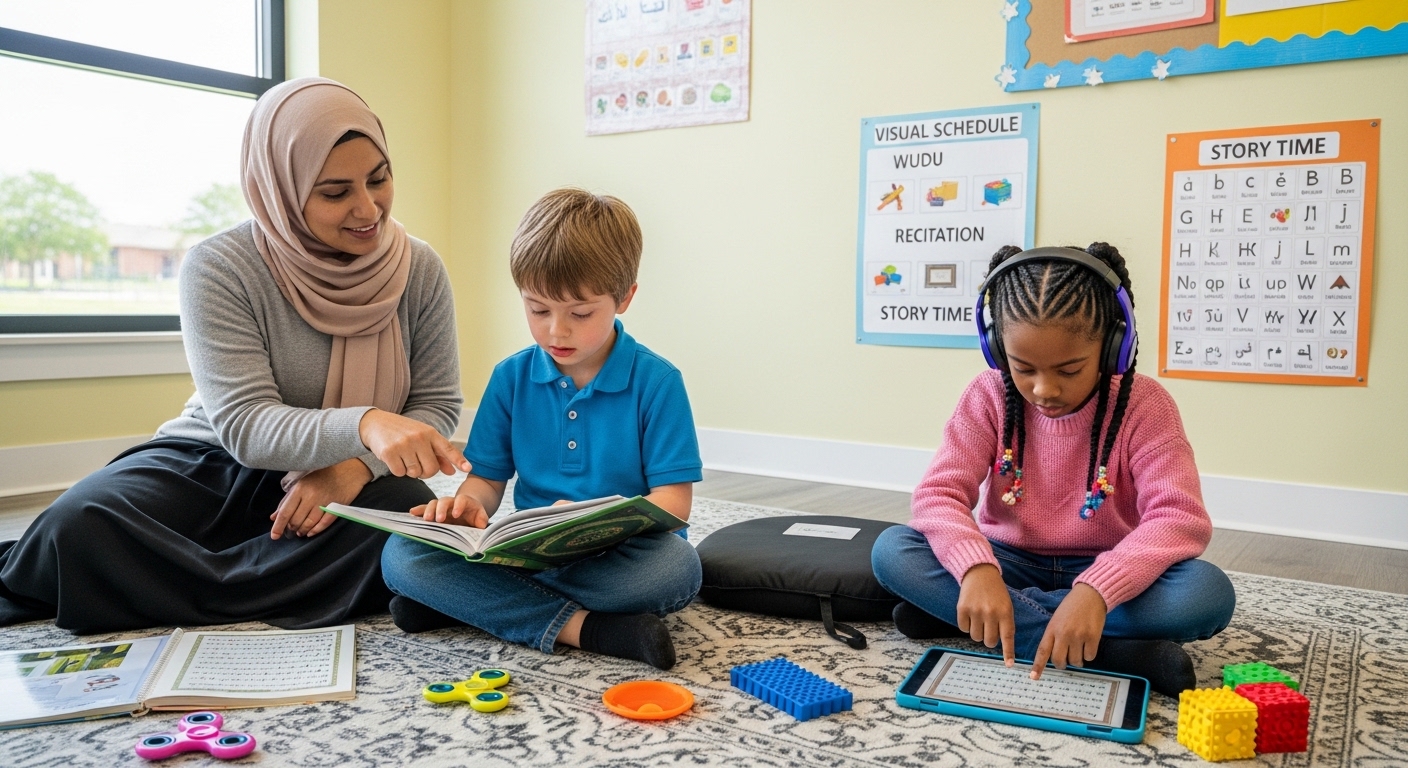
Key Strategies for Teaching Autistic Children
Children with Autism Spectrum Disorder (ASD) thrive in predictable environments. Here are the core strategies our expert tutors use to make Quran learning accessible and enjoyable.
Visual Schedules
We use clear, visual roadmaps for every lesson. Knowing exactly what comes next—like starting with a Dua, moving to Noorani Qaida, and ending with a story—reduces anxiety.
Sensory-Friendly Environment
Loud recitations can cause sensory overload. Our tutors are trained to maintain a calm tone, adjust screen brightness, and eliminate sudden loud noises during the session.
Repetition & Routine
Repetition is key to retention. We build a consistent daily routine, reviewing previous lessons gently before introducing new Arabic letters or Tajweed rules.
Positive Reinforcement
We celebrate every milestone, no matter how small. Using digital rewards, praise, and gamified learning keeps the child motivated and builds their self-esteem.
Why Online Learning is Ideal for Autistic Students
The Comfort of Home
Traditional madrasas can be overwhelming due to noise, fluorescent lighting, and large groups. Online classes allow your child to learn in their own safe, controlled environment, which drastically improves focus and comfort.
One-on-One Pacing
Every child on the spectrum is unique. An online Quran course provides 1-on-1 attention, meaning the tutor can slow down, pause, or switch activities the moment they notice the child becoming overwhelmed or disengaged.
Specialized Tutors
Finding a local teacher trained in special education can be difficult. Our academy bridges this gap by providing male and female tutors specifically trained in adaptive Islamic education through our special needs Quran classes, ensuring your child receives compassionate and professional guidance.
Frequently Asked Questions
Yes. Non-verbal children can still benefit from auditory exposure. Listening to soothing Quran recitation helps with emotional regulation and spiritual connection, even if they are not actively speaking.
We typically recommend 15 to 20-minute sessions to prevent burnout. The duration can be adjusted based on the individual child's attention span and daily energy levels.
Our tutors are trained to recognize the signs of sensory overload. If a child becomes distressed, the tutor will immediately lower demands, offer a cognitive break, or end the session early without any pressure.